Vaca Muerta vs the Permian Basin: Why Global Capital Is Choosing Argentina in 2026 | VacaMuertaXP
Data-driven comparison of Vaca Muerta and the Permian Basin in 2026. Reserve size, breakeven costs, RIGI tax stability, and why Continental Resources and Chevron are entering Argentina now.
In January 2026, Harold Hamm's Continental Resources — the company that unlocked the Bakken and built one of the largest positions in the Permian Basin — announced its first international acquisition: four blocks in Vaca Muerta, Argentina.
This was not a diversification play. It was a statement about where the best risk-adjusted returns in global shale are in 2026.
Here is what the data says.

The numbers side by side
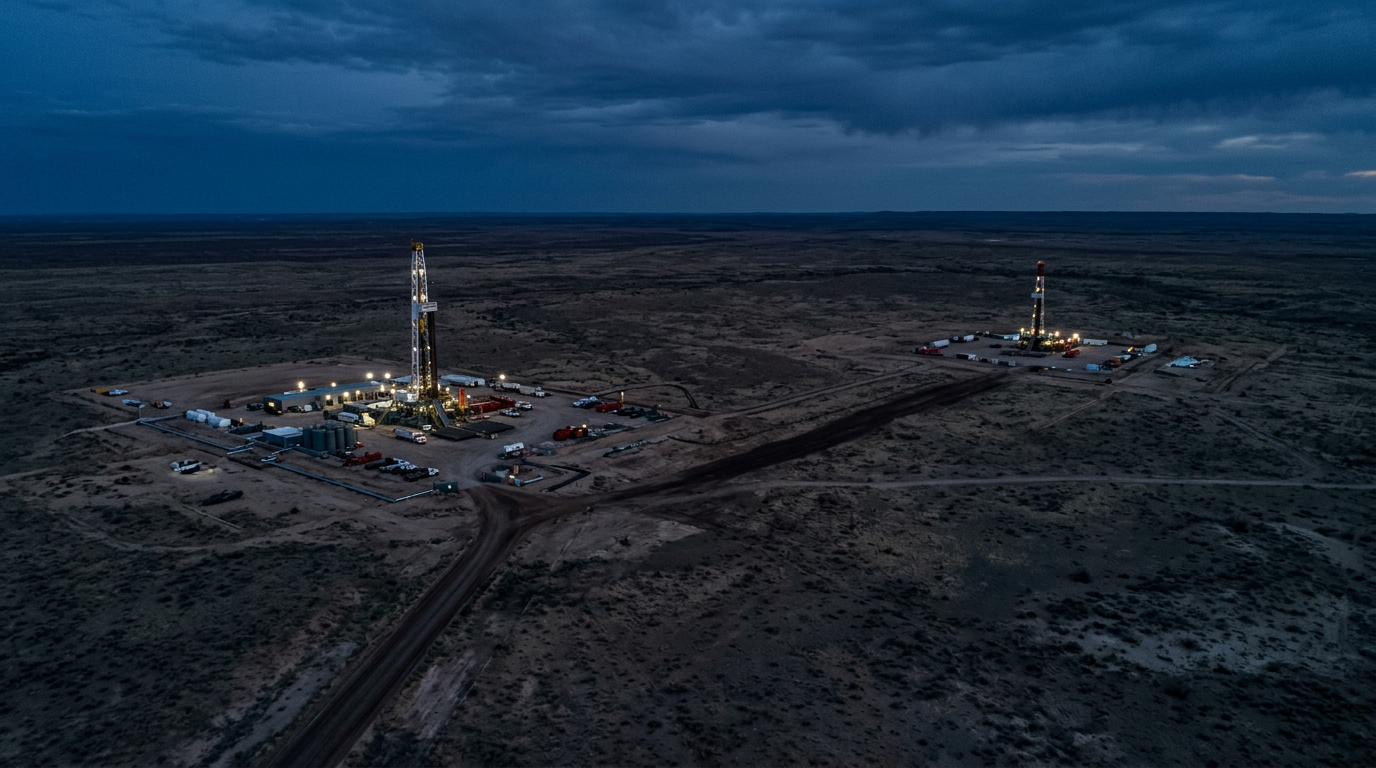
Vaca Muerta sits in Neuquén province, Patagonia. It is the second largest shale gas reserve and fourth largest shale oil reserve in the world. The formation spans approximately 30,000 square kilometers — roughly the size of Belgium.
The Permian Basin in West Texas and New Mexico remains the world's most productive oil field, generating approximately 6.2 million barrels per day in 2026 and accounting for nearly half of total US oil production.
By reserve size, both basins are generational assets. The comparison that matters for capital allocation decisions in 2026 is everything else.
Breakeven costs: Vaca Muerta wins
The Permian Basin's breakeven cost has risen steadily as the most productive acreage matures. Current estimates place West Texas Intermediate breakeven costs at $42 to $52 per barrel for new wells in core acreage, and higher in secondary zones.
Vaca Muerta's breakeven cost is estimated at $36 to $45 per barrel at the wellhead, with Neuquén Governor Figueroa citing ongoing negotiations to eliminate capital goods import duties that would reduce this further. At Brent above $110 — driven by the ongoing Strait of Hormuz disruption — Vaca Muerta operators are generating margins that make even the most capital-intensive projects compelling.
Regulatory stability: RIGI changes everything
This is the decisive factor for international capital in 2026.
The Permian Basin operates under US federal and state regulatory frameworks. These are stable but subject to administration changes — the shift between administrations in Washington has historically affected drilling permits, methane regulations, and pipeline approvals.
Argentina's RIGI regime, established under Law 27,742 and expanded by Decree 105/2026, offers something the Permian cannot: contractual 30-year tax stability. Operators who commit under RIGI lock in their fiscal terms until 2054 regardless of which government is in power.
Chevron's Argentina country manager Ana Simonato confirmed at Vaca Muerta Insights in March 2026 that the 30-year stability and free profit repatriation rules were the decisive factors in the company's RIGI evaluation. Vista Energy CEO Miguel Galuccio has made the same point explicitly — RIGI changes the investment calculus for Argentine assets fundamentally.
Export capacity: the VMOS factor
The Permian Basin's Achilles heel has historically been pipeline takeaway capacity. The 2018 to 2019 Permian bottleneck, when WTI Midland traded at a $20 discount to WTI, remains a cautionary tale for operators.
Vaca Muerta's Vaca Muerta Oil Sur pipeline — the $3 billion VMOS project backed by Chevron, YPF, and PAE — is on track for late 2026 commissioning with initial capacity of 180,000 barrels per day, expandable to 550,000. This directly connects Neuquén production to the Atlantic export terminal at Punta Colorada.
For international operators, this means Vaca Muerta production has a clear path to global markets at world prices — not at a discounted domestic price or subject to export restrictions that plagued previous Argentine governments. President Milei prohibited those restrictions by law.
The production trajectory
Argentina produced 865,000 barrels per day of crude oil in February 2026 — a 15.3% increase over February 2025. Neuquén province accounted for 603,800 barrels per day, up 30.3% year on year.
Energy economist Daniel Dreizzen estimates Argentina's crude production could reach 1.5 to 2 million barrels per day — a trajectory that would make Argentina a top-10 global oil producer within a decade.
The Permian is mature. Vaca Muerta is in its first decade of large-scale development. For capital seeking production growth — not just production stability — the comparison is clear.
What this means for the supply chain
The capital flowing into Vaca Muerta — US$79.6 billion (as of November 2026) across 30 approved RIGI projects, with 22 more under evaluation worth US$151.9 billion — comes with a local supplier plan under Law 27,742: at least 20% of what each project pays suppliers of goods and works goes to local suppliers, when the local offer is available at market price and quality.
For Argentine suppliers, this is the demand signal. For Texas operators entering Vaca Muerta, it is the compliance obligation. For Argentine suppliers looking at the Permian, it is the proof of concept — if you can operate to RIGI standards in Neuquén, you can operate to Permian standards in Texas.
The bilateral energy corridor between Texas and Neuquén is not a projection. It is already moving capital and expertise in both directions. VacaMuertaXP is the infrastructure layer that connects both ends.
→ For operators: vacamuertaxp.com/operators
→ For suppliers entering the Permian: vacamuertaxp.com/texas-entry
→ Schedule at OTC Houston: vacamuertaxp.com/otc-2026#schedule